
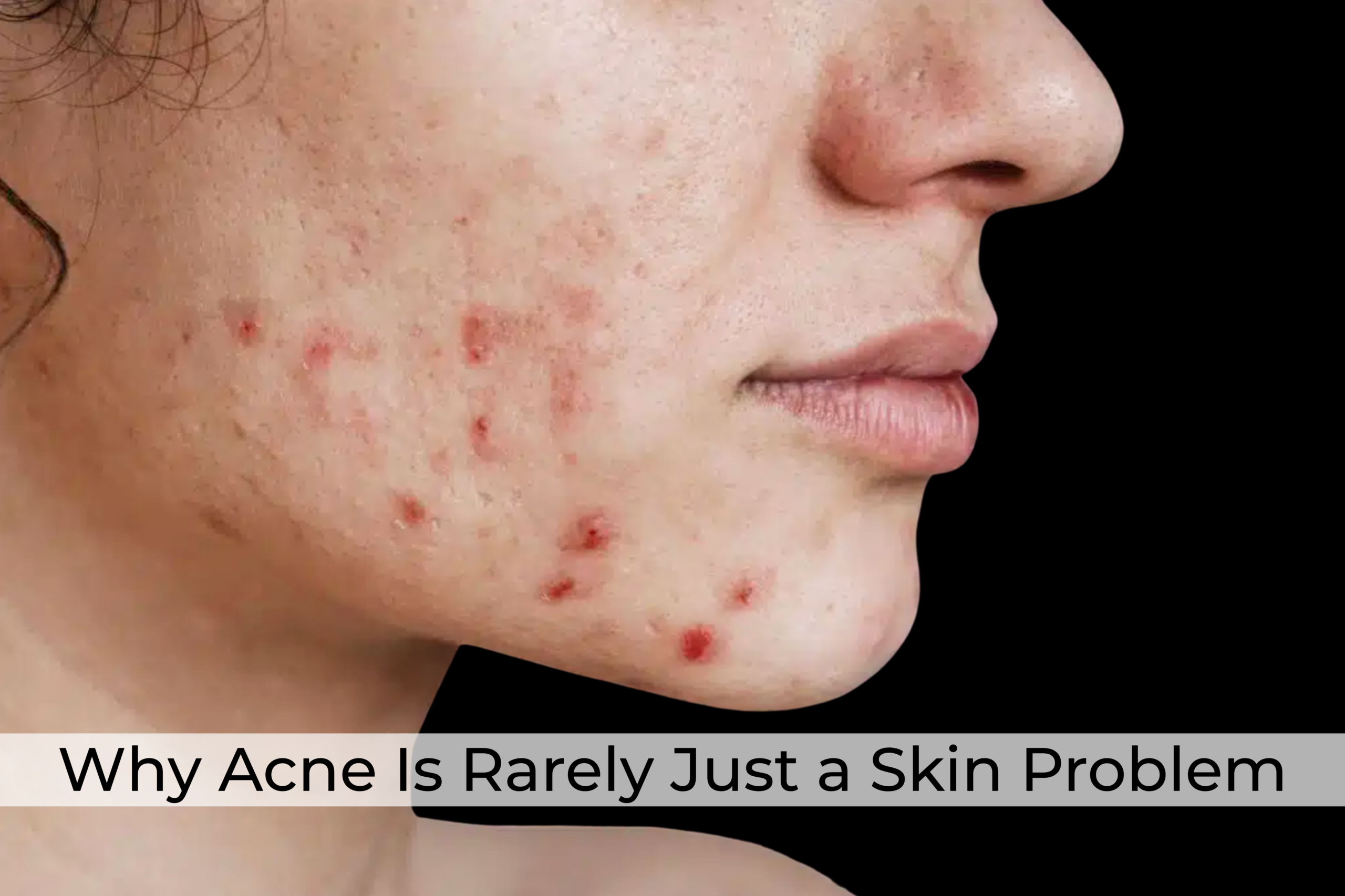
Why Acne Is Rarely Just a Skin Problem
If acne were simply a surface issue, clearing it would be easy.
Cleanse. Treat. Repeat.
But if that were true, acne wouldn’t persist into adulthood, resist “good skincare,” or flare during stress, hormonal shifts, or lifestyle changes.
Acne is rarely just a skin problem.
It’s a reflection of what’s happening beneath the surface—biologically, hormonally, environmentally, and behaviorally.
As a Certified Acne Specialist, I don’t just look at what’s happening on the skin.
I look at patterns, triggers, and root causes.
Acne Can be an Inflammatory Condition
At its core, acne can be an inflammatory condition—not a hygiene issue, not a willpower issue, and not a failure of skincare.
Inflammation can be driven by:
-
Hormonal fluctuations
-
Chronic stress
-
Blood sugar instability
-
Gut imbalance
-
Barrier disruption
-
Overuse of actives or exfoliants
-
Environmental and lifestyle stressors
This is why “dry it out” approaches often backfire. They may suppress symptoms short-term, but they frequently worsen inflammation long-term—keeping acne stuck in a cycle.
The Missing Piece in Most Acne Explanations: Abnormal Cell Shedding
One of the most overlooked drivers of acne isn’t oil or bacteria—it’s abnormal cell turnover inside the pore, also known as abnormal keratinization.
Acne is driven by four core mechanisms, and excessive or irregular shedding of dead skin cells is one of the earliest and most important.
In acne-prone skin, keratinocytes (dead skin cells) shed too quickly and behave differently than they should. Instead of shedding evenly, they become sticky and compact—creating the foundation for clogged pores.
What Should Happen in Healthy Skin
-
Dead skin cells shed evenly
-
Oil (sebum) flows freely out of the pore
-
The follicle remains open and clear
What Happens in Acne-Prone Skin
-
Skin cells shed too quickly
-
Cells become sticky and compact
-
They mix with oil (sebum)
-
The pore becomes clogged, forming a microcomedone
This process happens before bacteria and inflammation even enter the picture.
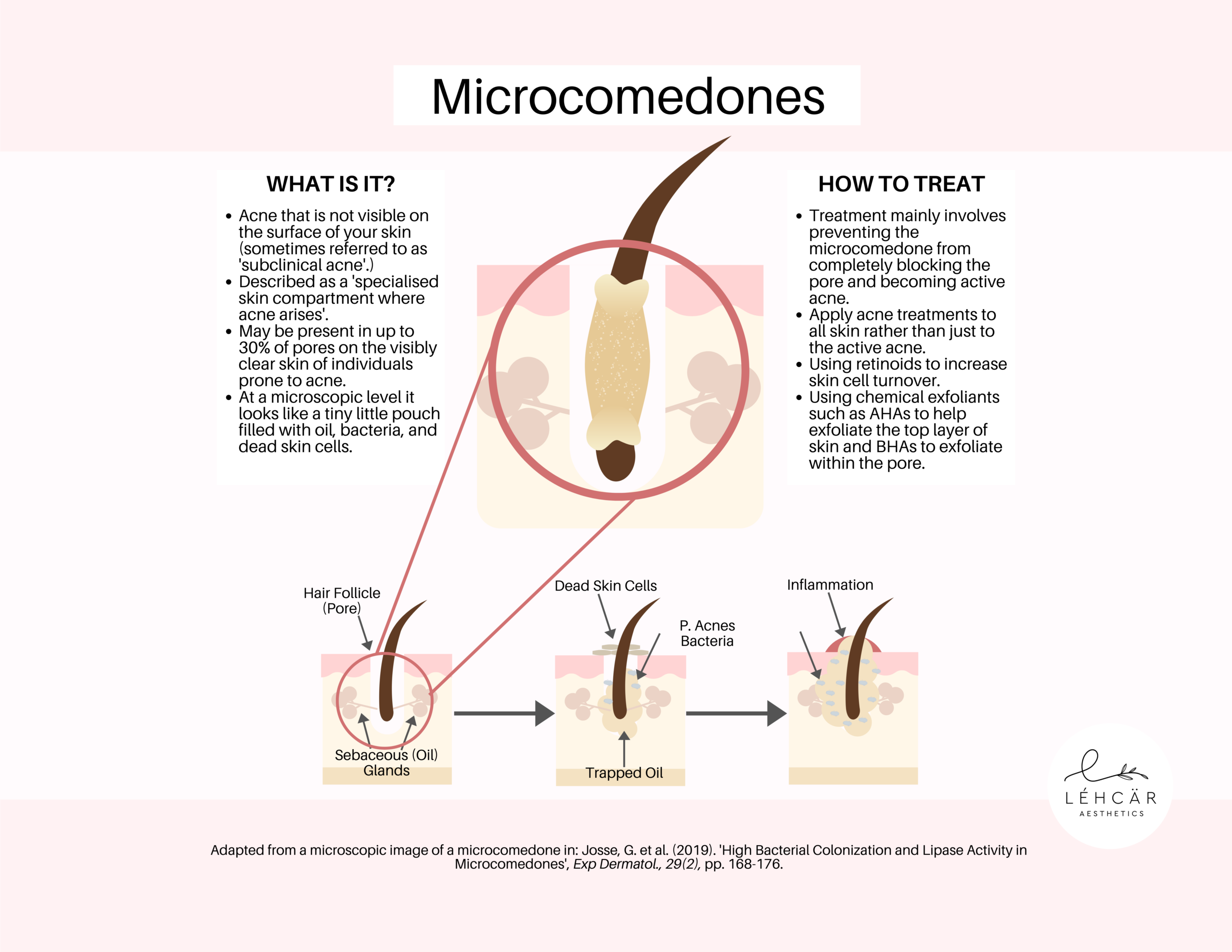
Acne doesn’t start as a pimple.
It starts as a microscopic blockage deep within the follicle.
The Four Core Drivers of Acne (Clinically Accurate)
-
Abnormal keratinization
→ Rapid, sticky shedding of dead skin cells that clog pores -
Excess sebum production
→ Often hormonally driven -
Cutibacterium acnes overgrowth
→ Thrives in clogged, oxygen-poor pores -
Inflammation
→ The immune response that creates redness, swelling, and pain
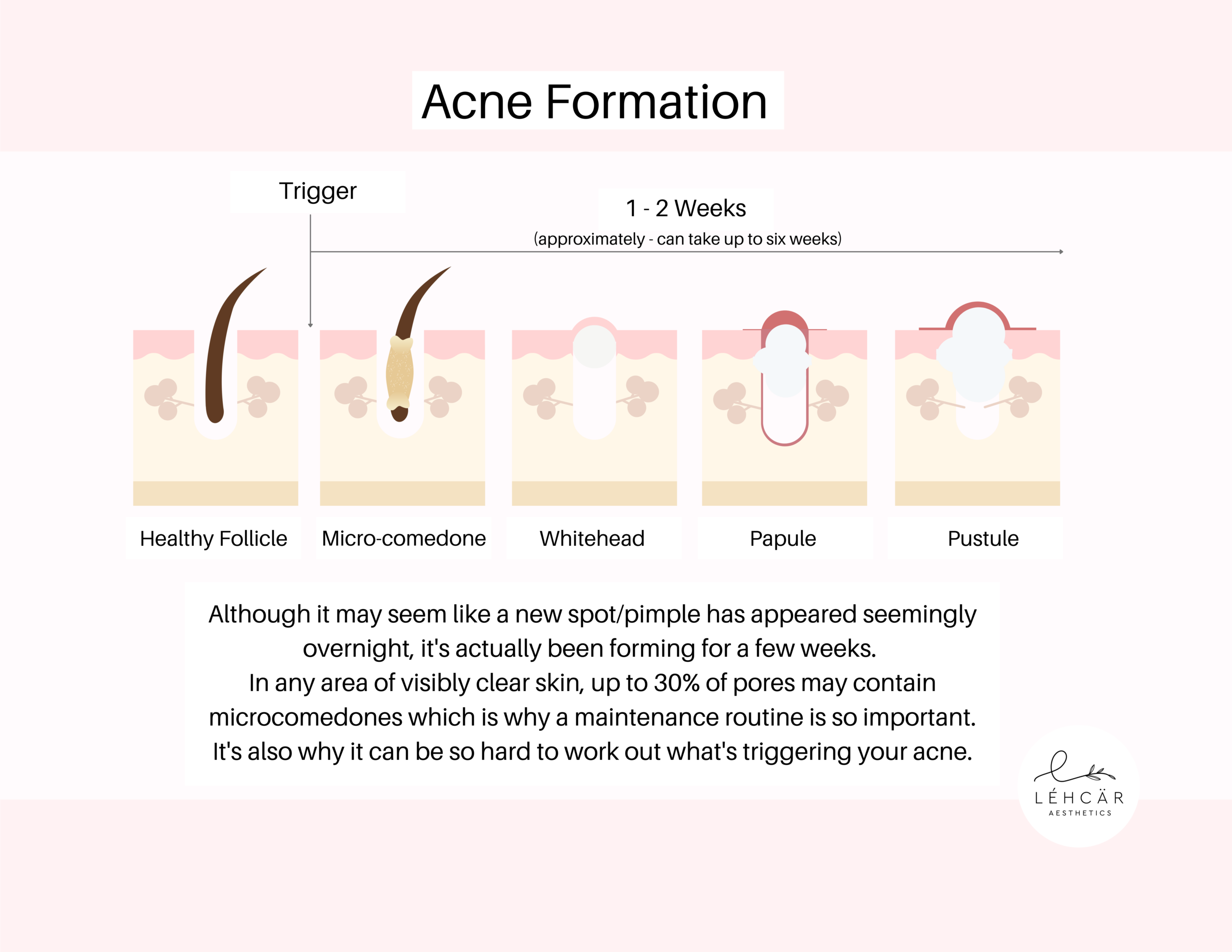
Acne begins at the microcomedone stage—long before anything visible appears on the surface.
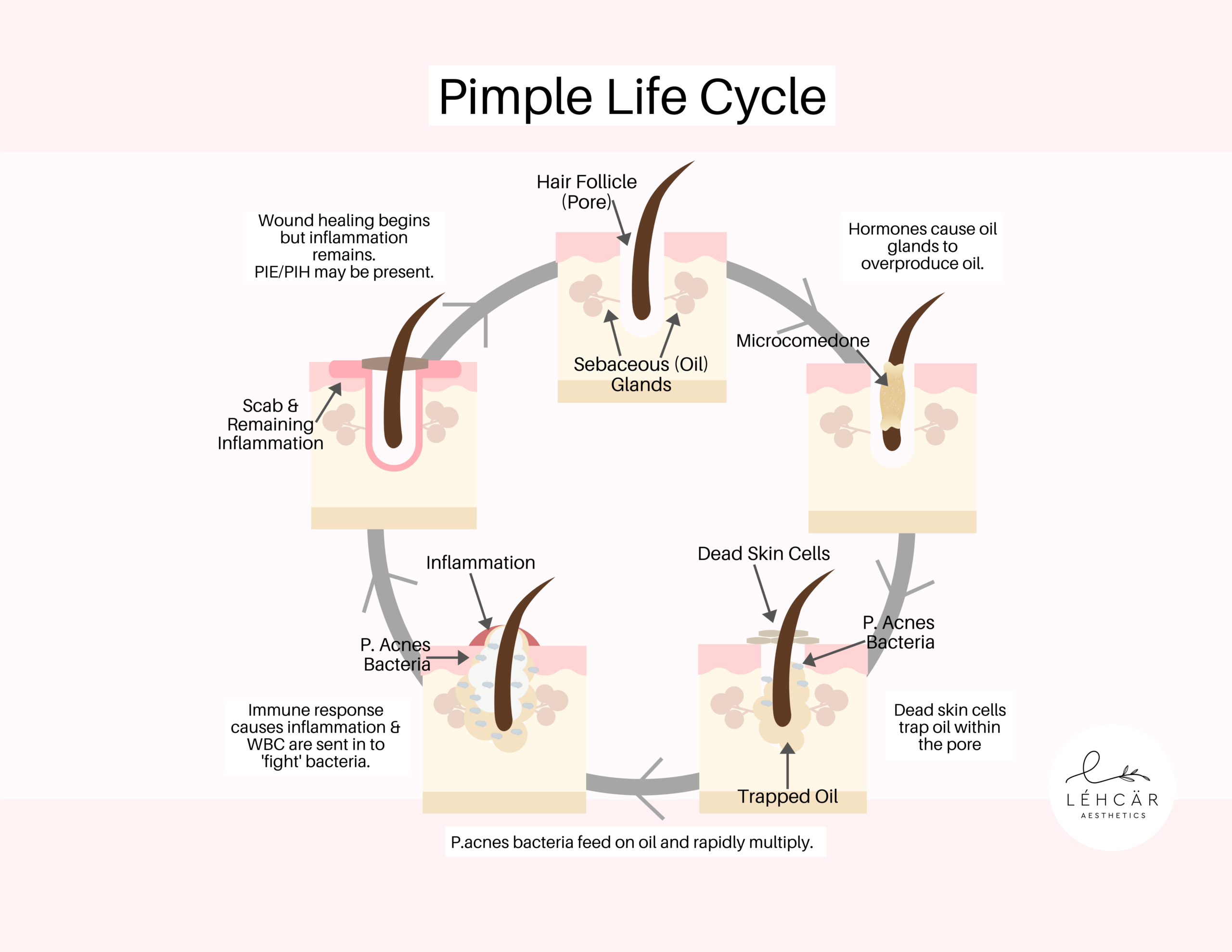
Why This Matters Clinically
Understanding abnormal cell shedding explains why:
-
Acne can exist without excessive oil
-
Dry or dehydrated skin can still break out
-
“Drying out” acne often makes it worse—not better
-
Gentle keratolytics, used strategically, outperform harsh scrubs
It also explains why barrier health and controlled exfoliation are essential—and why aggressive stripping delays healing and prolongs acne cycles.
Clear skin doesn’t come from force.
It comes from regulation.
Hormones Play a Bigger Role Than Most People Realize
Acne isn’t just a teenage issue—and that’s not accidental.

Hormones influence:
-
Sebum (oil) production
-
Cell turnover
-
Inflammatory signaling
-
Bacterial overgrowth
This is why acne commonly appears:
-
Along the jawline and chin
-
Around menstrual cycles
-
During times of high stress
-
With insulin, thyroid, or adrenal imbalance
Blood work may come back “normal,” yet acne persists. That’s because normal doesn’t always mean optimal—and acne often lives in the gray areas standard testing doesn’t fully address.
Stress Quietly Disrupts the Skin

Stress elevates cortisol.
Cortisol increases inflammation.
Inflammation disrupts oil flow and barrier function.
The result? Breakouts that don’t respond the way they “should.”
This is why acne frequently flares during:
-
Emotional stress
-
Sleep disruption
-
Overtraining
-
Undereating or restrictive dieting
You can be doing everything “right” topically and still struggle if your nervous system is chronically dysregulated.
The Gut–Skin Connection Is Often Overlooked

Your skin does not exist in isolation.
Digestive imbalance, food sensitivities, and low-grade systemic inflammation can all influence acne—especially when breakouts are persistent, cyclical, or resistant to topical care alone.
This doesn’t mean everyone with acne needs extreme diets or aggressive supplementation.
It means acne is often a signal, not a flaw—and deserves to be interpreted, not punished.
What Actually Works: Strategy Over Randomness
For acne cases, I rely on clinically proven, education-driven knowledge, skincare, and targeted supplements designed specifically for acne.
Why? Because acne requires strategy and science-backed efficacy—not random products or trend-driven routines.

As a Certified Acne Specialist, I offer:
-
Structured Acne Bootcamps for clients who need accountability, education, and real change
-
Customized acne protocols that address both intrinsic factors (hormones, stress, inflammation) and extrinsic factors (products, environment, habits)
-
Acne-specific treatments designed to calm inflammation, support the barrier, and safely accelerate results
Acne responds best to systems—not guesswork.
Why There Is No One-Size-Fits-All Acne Routine
Acne is not one condition.
Some clients need:
-
Barrier repair and simplification
-
Nervous system regulation
-
Inflammation control
Others need:
-
Targeted actives
-
Lifestyle adjustments
-
Ongoing monitoring and refinement
Sometimes skincare alone isn’t enough—and knowing when to say that is part of ethical, effective care.
The Role of an Esthetician Is Guidance—Not Guesswork

My role isn’t to sell more products.
It’s to help clients understand:
-
What their skin is communicating
-
What’s helping vs harming
-
What’s worth their time, money, and energy
That’s why I prioritize education, curation, and collaboration over trends.
Final Thought
If acne were just a surface problem, it would already be gone.
The solution isn’t harsher.
It’s smarter.
It’s individualized.
It’s strategic.
This is exactly why I curate acne care—not just treat it.

Rachel Shoham Hackett
Certified Acne Specialist
Licensed Medical Esthetician & Licensed Laser Practitioner
Skin Health Educator
Founder, LéhCär Aesthetics
Wellness Sommelier™